Double Fisherman's Knot
Also known as:Grapevine
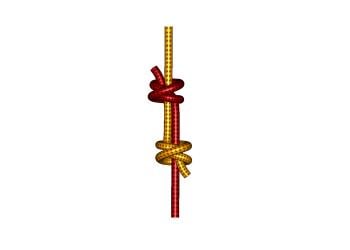
Description
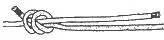
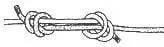
The double fisherman's knot is a more secure version of the fisherman's knot, using double overhand knots instead of single ones. Each end wraps twice around the opposite rope before passing through. It is one of the most secure bends and is commonly used in climbing.
Common Uses
Used in climbing and mountaineering for joining two ropes for abseiling, and in arboriculture for creating prusik loops or joining cordage.
When to Choose This Knot
Choose this knot when joining two rope ends. Bends work best when rope diameter, material, surface texture, and expected load are considered together.
Safety Notes
- Avoid joining ropes of very different diameter or stiffness unless the bend is designed for that purpose.
- Set both sides evenly and leave enough tail on each rope.
- Do not use an unfamiliar bend in a life-safety system without supervised practice and inspection.
How to Tie
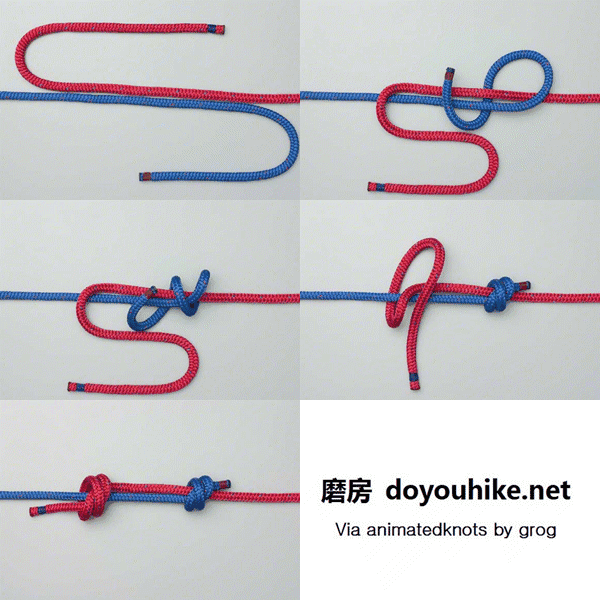
- 1Lay the two rope ends parallel, pointing in opposite directions.
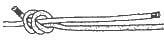
- 2Tie a double overhand knot in one end, wrapping twice around the other rope.
- 3Tie a double overhand knot in the second end around the first rope.
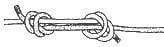
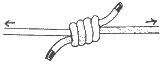
- 4Slide the two knots together so they interlock.
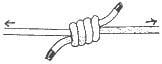
- 5Pull both standing ends firmly to set the knot.
- 6Dress so the wraps are parallel and the knots sit flush.
Common Mistakes
- Tying the two sides asymmetrically.
- Using a bend for a slippery cord without adding the required backup or stopper.
- Assuming a bend that works in dry rope will behave the same when wet, icy, or dirty.