Reef Knot
Also known as:Flat Knot
Description
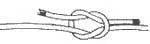
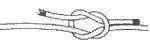
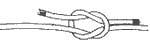
The reef knot is one of the oldest and most well-known knots, formed by tying two overhand knots in opposite directions. It lies flat and is easy to untie even after being loaded. Its symmetrical appearance makes it visually distinctive.
Common Uses
Ideal for tying bandages, bundling packages, and reefing sails. Not suitable for joining ropes under heavy load or for life-safety applications.
When to Choose This Knot
Choose this knot when joining two rope ends. Bends work best when rope diameter, material, surface texture, and expected load are considered together.
Safety Notes
- Avoid joining ropes of very different diameter or stiffness unless the bend is designed for that purpose.
- Set both sides evenly and leave enough tail on each rope.
- Do not use an unfamiliar bend in a life-safety system without supervised practice and inspection.
How to Tie
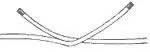
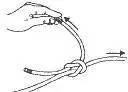
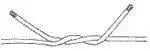
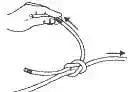
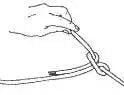
- 1Cross the right end over the left end and tie a simple overhand knot.
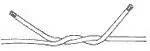
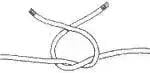
- 2Cross the same end over the other again, but in the opposite direction.
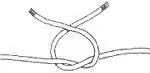
- 3Pass the end through the loop and pull tight.
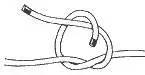
- 4Dress the knot so both loops sit symmetrically.
- 5Test by pulling — if it rolls or capsizes, it was tied incorrectly.


Common Mistakes
- Tying the two sides asymmetrically.
- Using a bend for a slippery cord without adding the required backup or stopper.
- Assuming a bend that works in dry rope will behave the same when wet, icy, or dirty.