Sheet Bend
Also known as:Weaver's Knot
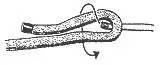
Description
The sheet bend is a reliable method for joining two ropes of different diameters. It works by forming a loop in the thicker rope and weaving the thinner rope through and around it. The knot holds well under tension and is easy to untie after loading.
Common Uses
Essential for sailing to bend a sheet to a sail clew, and widely used for joining lines of different thicknesses in general ropework.
When to Choose This Knot
Choose this knot when joining two rope ends. Bends work best when rope diameter, material, surface texture, and expected load are considered together.
Safety Notes
- Avoid joining ropes of very different diameter or stiffness unless the bend is designed for that purpose.
- Set both sides evenly and leave enough tail on each rope.
- Do not use an unfamiliar bend in a life-safety system without supervised practice and inspection.
How to Tie
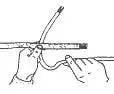
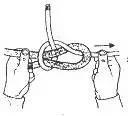
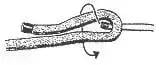
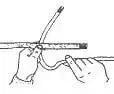
- 1Form a bight in the thicker or more rigid rope.
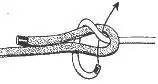
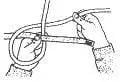
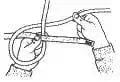
- 2Pass the working end of the second rope up through the bight from underneath.
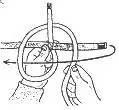
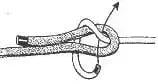
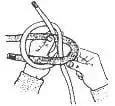
- 3Wrap the second rope around the standing part of the first rope.
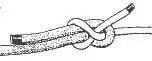
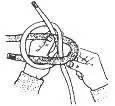
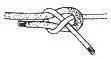
- 4Tuck the working end under its own standing part.
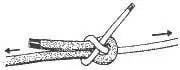
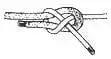
- 5Pull both ropes to tighten and set the knot.
- 6Ensure the thinner rope is securely trapped.


Common Mistakes
- Tying the two sides asymmetrically.
- Using a bend for a slippery cord without adding the required backup or stopper.
- Assuming a bend that works in dry rope will behave the same when wet, icy, or dirty.