French Bowline
Also known as:Double Loop
Description
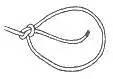
The French bowline creates two adjustable, parallel loops that share a common knot body. Unlike the standard bowline, the loops can be tightened or loosened independently to some degree. This knot distributes load across two contact points, making it more stable for certain applications.
Common Uses
Used in rescue operations to create a seat for an injured person, allowing one loop to go around the chest and the other around the legs.
When to Choose This Knot
Choose this knot when you need a loop that can connect to a post, ring, hook, carabiner, handle, or another rope part. Loop knots differ in whether they stay fixed, cinch down, or remain easy to untie after loading.
Safety Notes
- Confirm whether the loop is intended to be fixed or sliding before applying load.
- For climbing or rescue, use only knots and rope systems approved by your training program or local standard.
- Check that the standing part, tail, and loop are oriented correctly before loading.
How to Tie
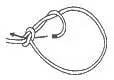
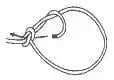
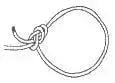
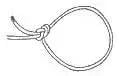
- 1Form a bight and tie an overhand knot near the end, leaving a large loop.
- 2Pass the bight through the overhand knot to form a second loop.
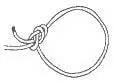
- 3Wrap the working end around the standing part and back through.
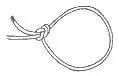
- 4Adjust both loops to the desired sizes.
- 5Pull the standing end to set the knot.
- 6Test that both loops hold independently.
Common Mistakes
- Confusing a fixed loop with a noose or running loop.
- Loading the loop from an unintended angle.
- Skipping a backup knot where the application requires one.